Alibaba took the wraps off the Zhenwu V900 at its Apsara Conference 2026, with CEO Eddie Wu calling it the most powerful AI chip in China and claiming triple the performance of the previous-generation M890, the AP reports.
The specs are aimed squarely at frontier-scale training: 216GB of GPU memory and 1,200GB/s of inter-chip bandwidth, up from the M890's 144GB and 800GB/s. The V900 can scale into supernode clusters of up to 500,000 cards, and T-Head, Alibaba's chip arm, says more than 1,000 V900s can operate as a single system versus 128 for the M890. Mass production and commercial release are slated for the first quarter of 2027, a quarter moved up from the company's May roadmap.
Shipping numbers give the claim some weight: T-Head has delivered more than 650,000 Zhenwu chips to over 400 external customers as of the conference, up from 560,000 in May, with an annual refresh cadence planned. What the announcement conspicuously omits is any absolute figure, no FLOPS, process node, foundry, power draw, or memory bandwidth. Analysts note that Alibaba's 'most powerful' and 'three-times' claims will ultimately be judged by delivered performance, especially since achievable FLOPS typically fall well below theoretical peaks.
The chip is designed to back Alibaba's next model generation. Qwen 4 is currently in training, with the V900 intended to support future Qwen models in the 5 to 10 trillion parameter range, well beyond the 2.4-trillion-parameter Qwen3.8-Max. Alibaba says Qwen3.8-Max improved its Artificial Analysis score from 40 to 45 through 33 iterative automated training cycles, and a separate chip-design experiment involving more than 10,000 EDA tool calls cut chip area by 42 percent without performance loss.
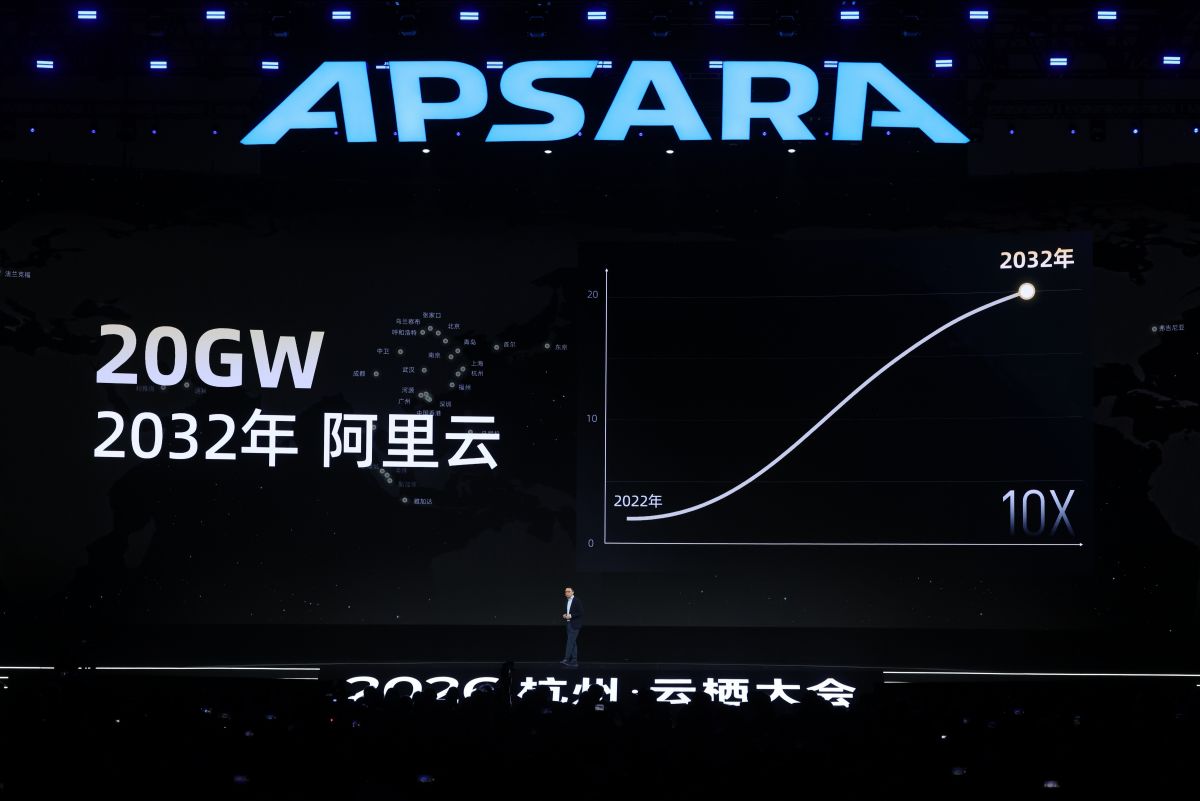
Alibaba Cloud's longer-term target is more than 20 gigawatts of data center capacity by 2032, though Wu acknowledged that global AI supply chain shortages are constraining how fast the company can scale. The announcement follows Huawei's own chip launch last week, and lands days before a planned summit between President Xi Jinping and President Trump in Washington, where AI policy and export controls top the agenda.
Comments (0)
Log in to join the discussion
Log InNo comments yet